



The report answers
four questions
Does anticipating disruption protect you from it?
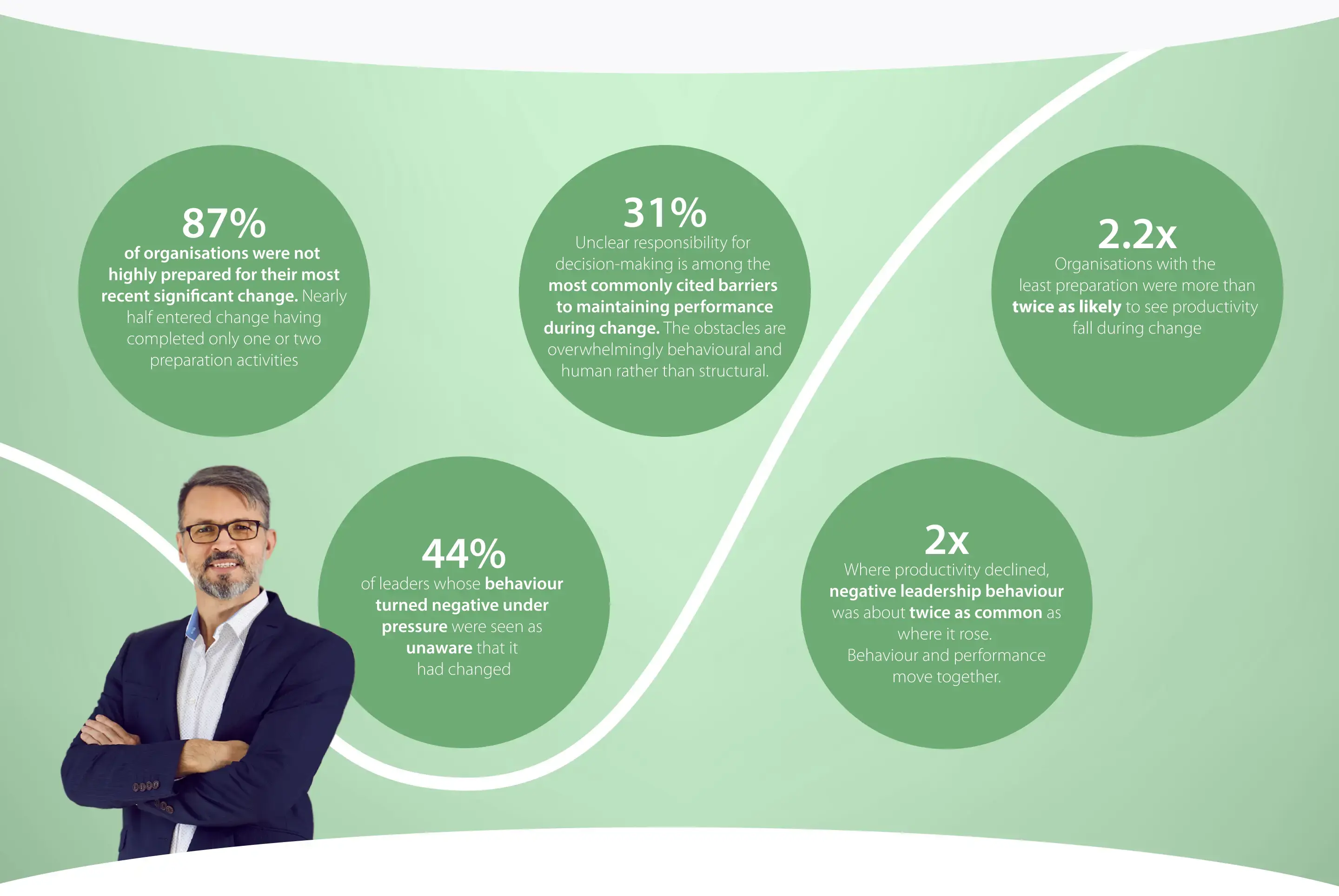
No. The data shows that many organisations accurately anticipate disruption yet still fail to prepare effectively for its human impact.
What do organisations actually prepare for?
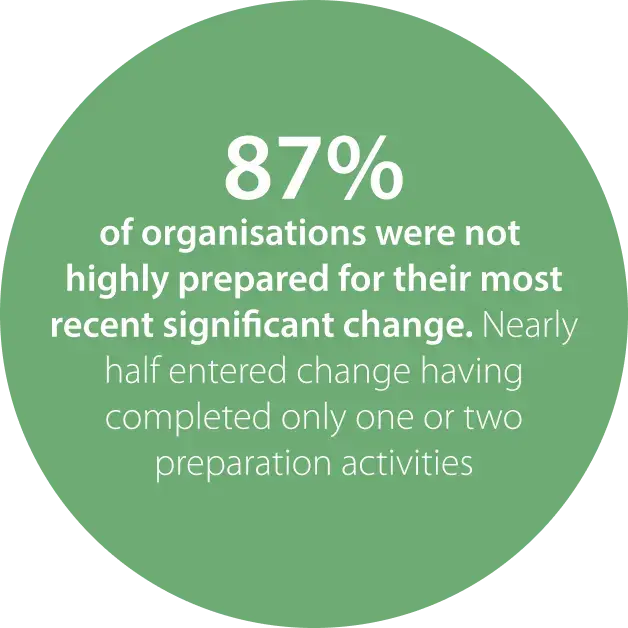
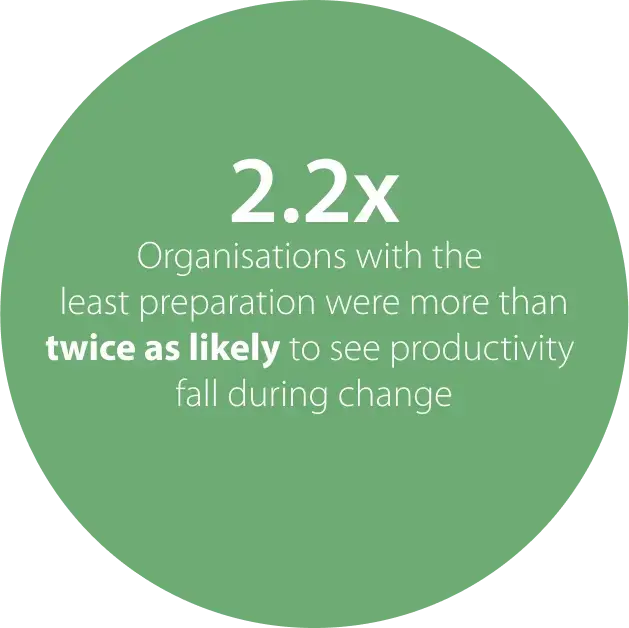
Structure, logistics and communication. We asked which preparation activities are most common, and which are most strongly associated with holding performance. They are not the same list.
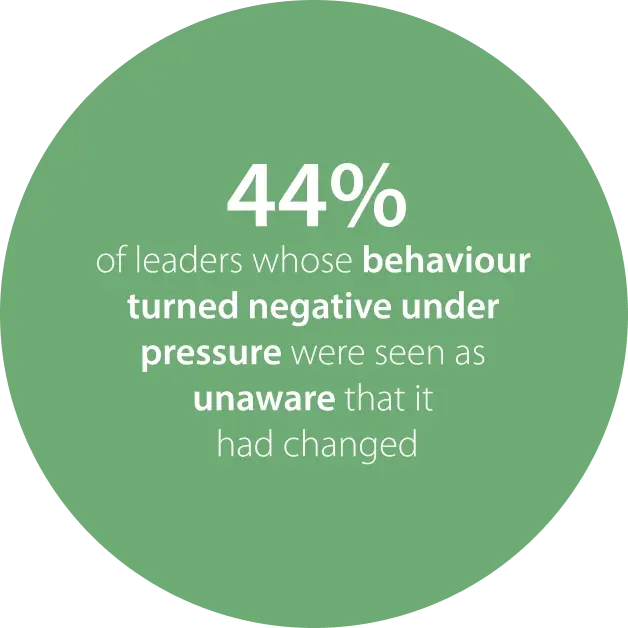
Are leaders behaving well under pressure?
63% were seen to behave more positively than usual. That is where the story starts, not where it ends.
What separates the organisations that hold performance from those that lose it?
Five behavioural readiness practices grounded in the data and demonstrated by the organisations reporting the strongest outcomes.
Behavioural readiness is the most underestimated performance risk in organisational change.
Every significant change arrives with a plan behind it. A structure, a timeline, a communication cascade, a set of milestones.
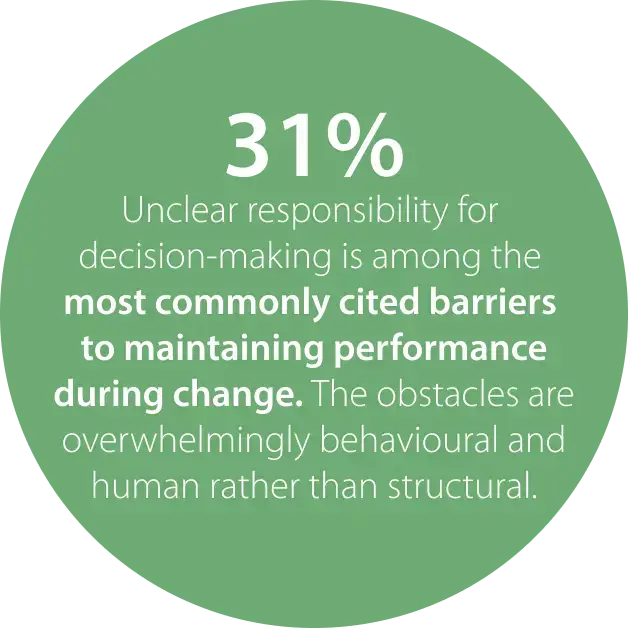
What the plan assumes is that the people delivering it will hold steady: that leaders will stay consistent, teams will stay aligned and people will adapt as the ground shifts beneath them. That assumption is rarely prepared for and almost never measured.
Behavioural readiness is the ability of leaders and teams to remain clear, consistent and constructive when change puts pressure on them and the way they work together.
It is measurable. It is consequential. And it is closable, but only if organisations recognise it exists.

If you lose the people; you lose the emotional challenge, and you won't win the rational challenge of change.