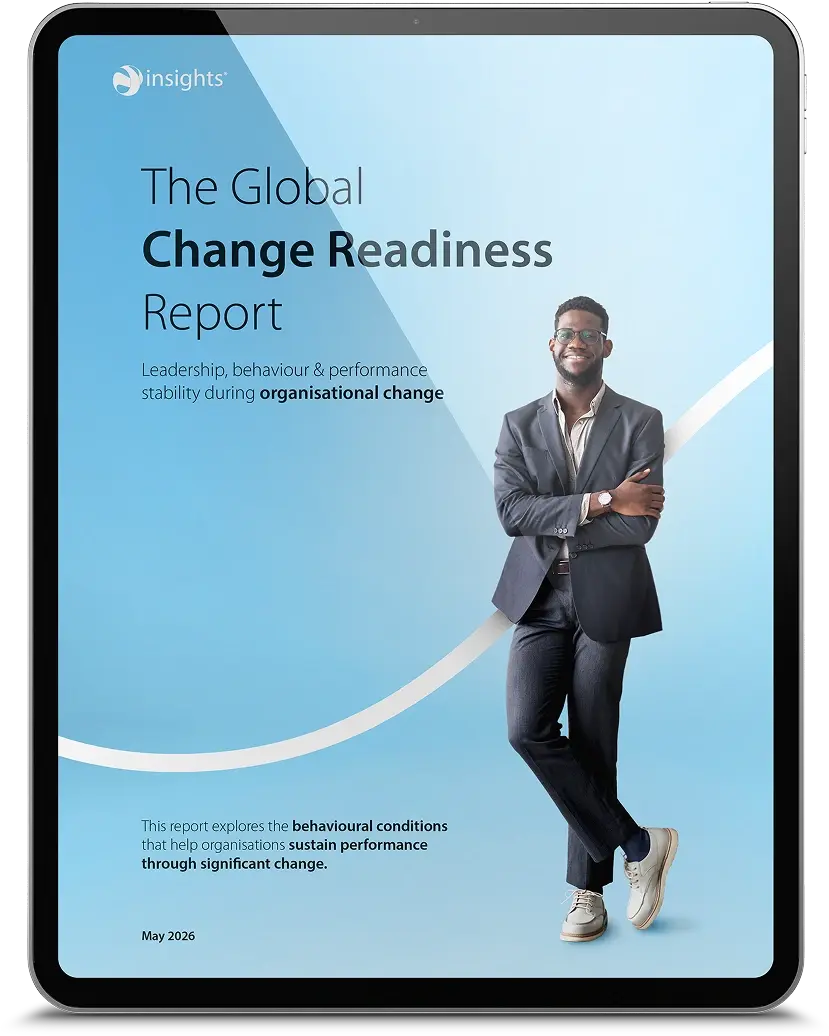




The report answers
four questions
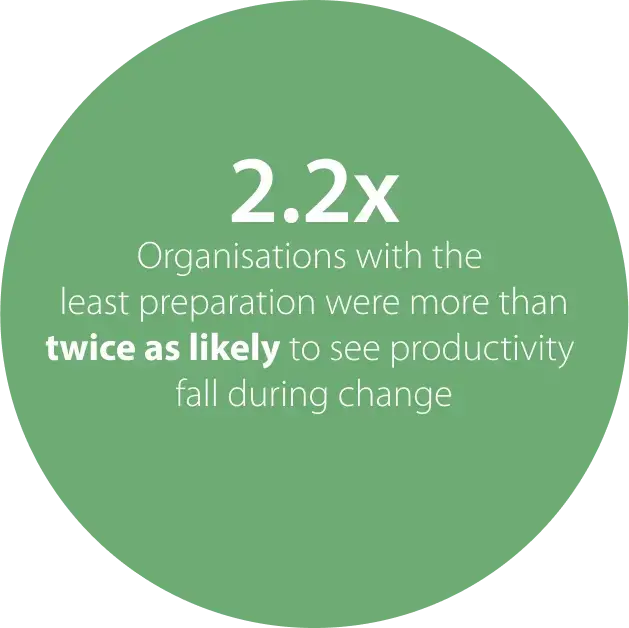
Does anticipating disruption protect you from it?
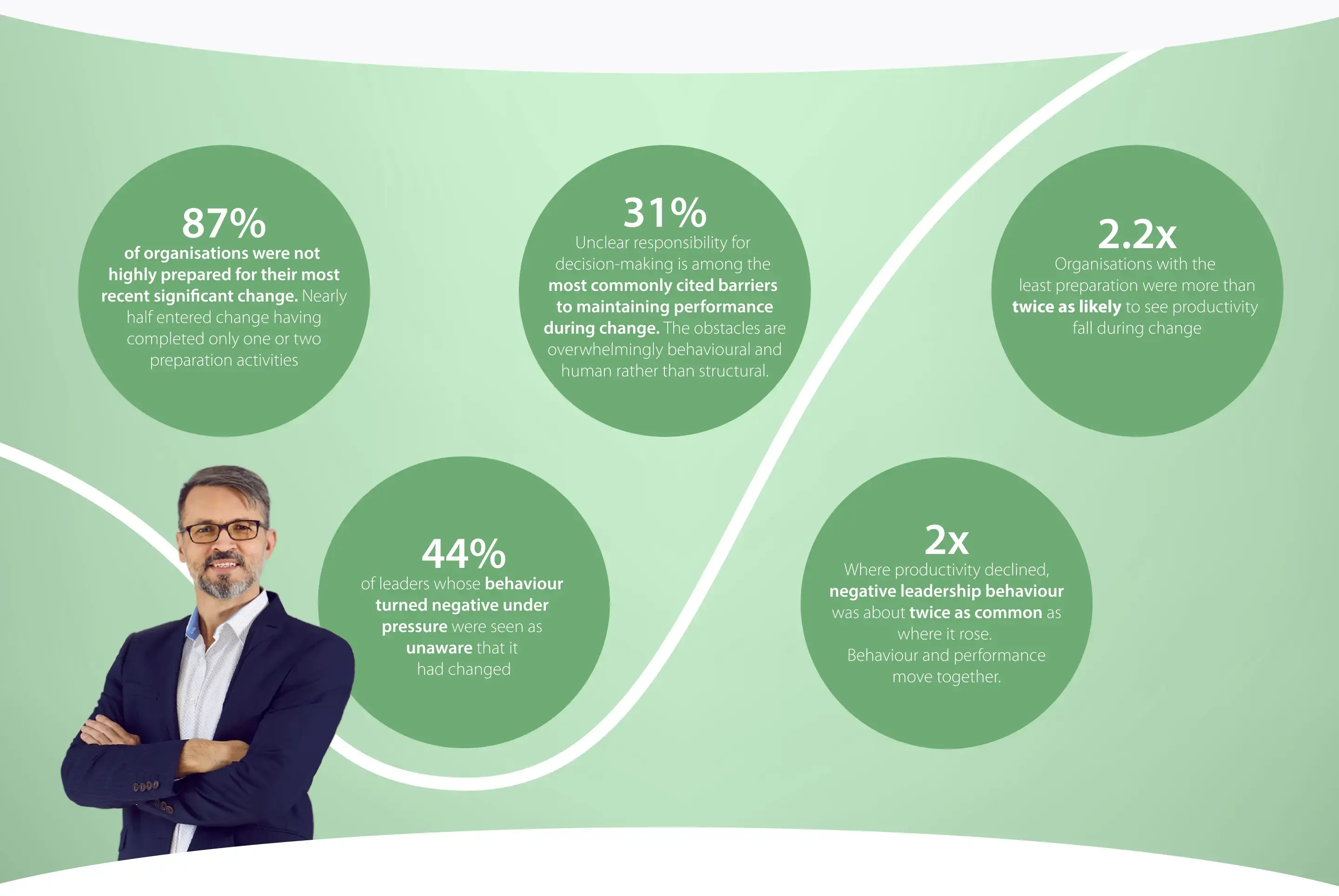
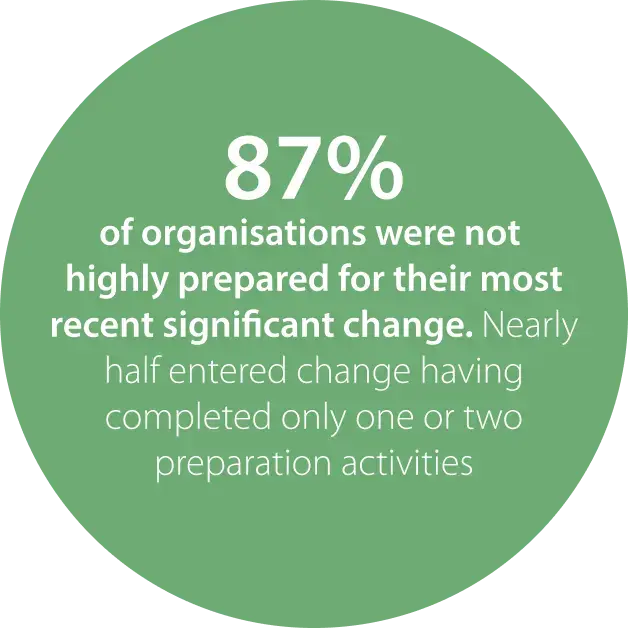
No. The data shows that many organisations accurately anticipate disruption yet still fail to prepare effectively for its human impact.
What do organisations actually prepare for?
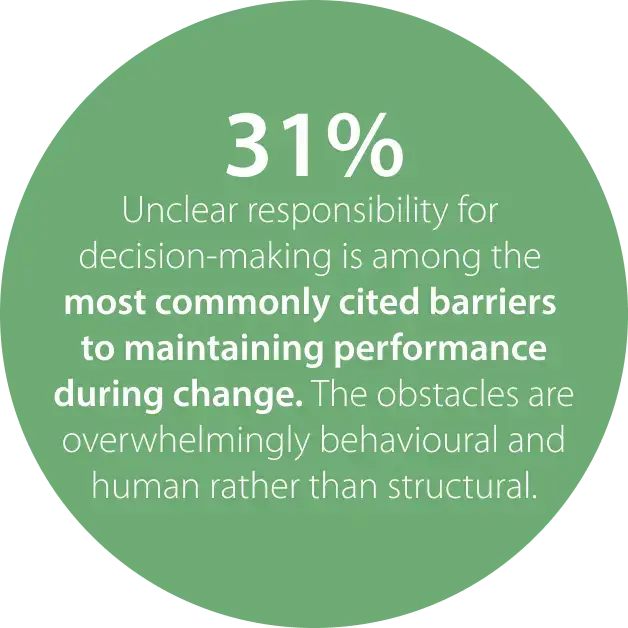
Structure, logistics and communication. We asked which preparation activities are most common, and which are most strongly associated with holding performance. They are not the same list.
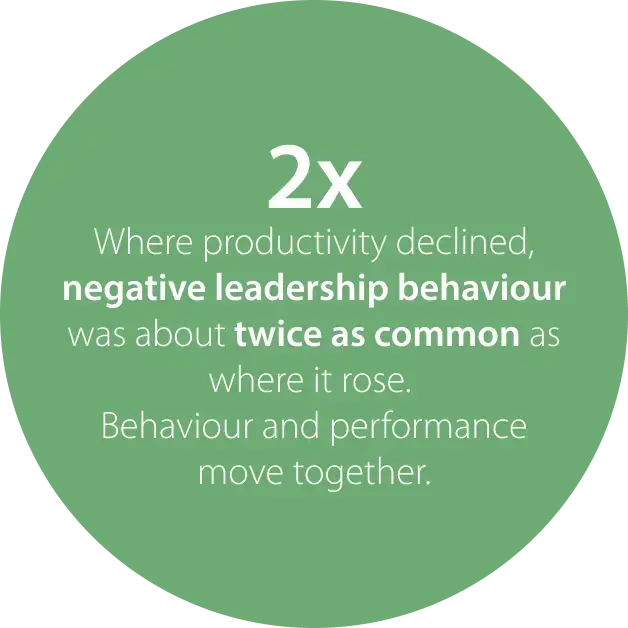
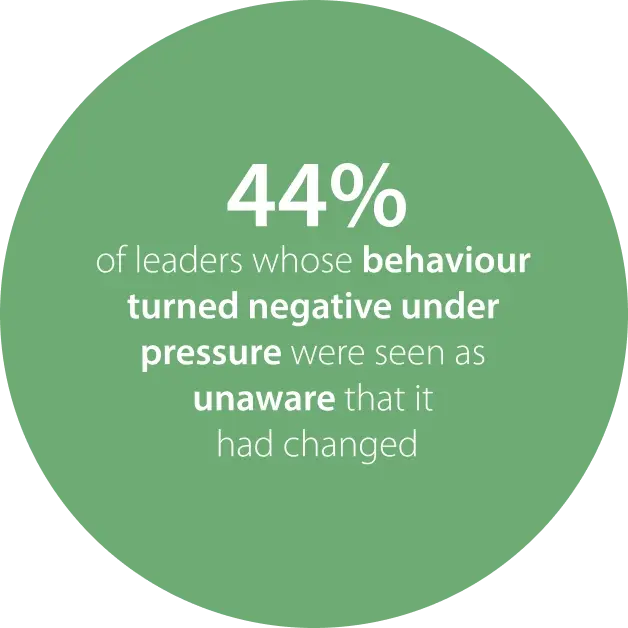
Are leaders behaving well under pressure?
63% were seen to behave more positively than usual. That is where the story starts, not where it ends.
What separates the organisations that hold performance from those that lose it?
Five behavioural readiness practices grounded in the data and demonstrated by the organisations reporting the strongest outcomes.
Behavioural readiness wird als Leistungsrisiko sehr oft unterschätzt.
Jede größere Veränderung beginnt mit einem Plan. Eine neue Struktur. Ein Zeitplan. Eine Kommunikationsstrategie. Klare Meilensteine.
Ein entscheidender Faktor wird dabei häufig vorausgesetzt:
Dass Menschen auch unter Druck handlungsfähig bleiben.
Dass Führungskräfte Orientierung geben.
Dass Teams verbunden bleiben.
Dass Menschen sich an neue Bedingungen anpassen können.
Genau das wird selten systematisch vorbereitet und noch seltener gemessen.
Was bedeutet Behavioural readiness?
Es beschreibt die Fähigkeit von Führungskräften und Teams, klar, konsistent und konstruktiv zu handeln, wenn Veränderung Druck erzeugt und sich die Zusammenarbeit verändert.
Sie lässt sich messen.
Sie beeinflusst die Leistung.
Und sie lässt sich gezielt stärken.
Vorausgesetzt, Organisationen erkennen sie als relevanten Faktor an.

Die größte Herausforderung bei Veränderung ist es, die Menschen mitzunehmen. Denn ohne sie funktioniert auch die beste Strategie nicht.